
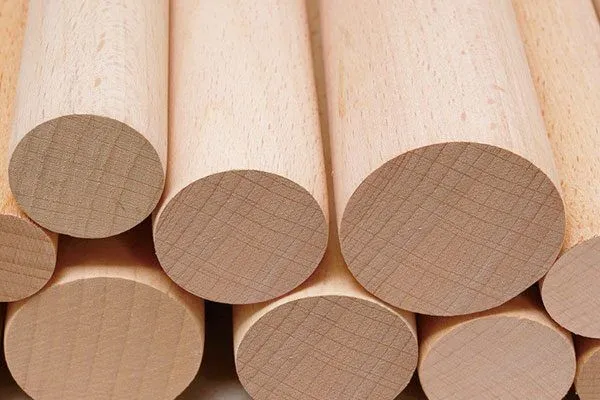
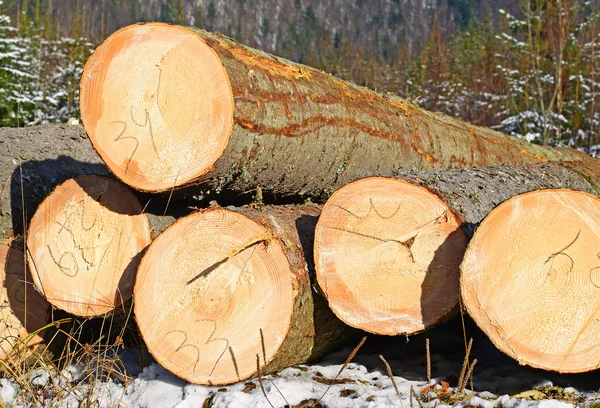
Beech wood comes from the genus Fagus, most commonly the European Beech (Fagus sylvatica) and American Beech (Fagus grandifolia). It is a strong, dense hardwood prized for its fine, uniform grain, light color, and excellent workability, especially its ability to be steam-bent into curved shapes.
Appearance & Texture
- Color: The wood is typically a pale cream to pinkish-brown color. When steamed (a common commercial process), the color darkens to a more uniform golden or reddish-brown hue.
- Grain: It has a characteristically straight grain and a fine, uniform texture, often featuring small, reddish-brown flecks (medullary rays) that are a distinctive feature.
- Aroma/Taste: Beech is virtually odorless and non-staining, making it suitable for kitchenware and food containers.
Strength & Durability
- Hardness & Density: Beech is a heavy, tough hardwood. The European variety has a Janka hardness rating of around 1,450 lbf, and the American variety is about 1,300 lbf, making it comparable to hard maple and durable enough for high-traffic use.
- Durability: Beech is rated as non-durable and is highly susceptible to rot, fungi, and insect attacks when exposed to moisture or outdoor elements unless treated with preservatives.
- Workability & Bending: A key feature of beech is its excellent workability. It cuts, machines, turns, glues, and finishes exceptionally well. It responds particularly well to the steam-bending process, allowing it to be molded into curved shapes for items like chair frames and musical instruments.
Common Uses
- Furniture: A primary use for beech is in furniture manufacturing, from standard chairs and tables to iconic bentwood designs like the Thonet coffee house chair and Hans Wegner’s Wishbone Chair.
- Flooring: Its hardness and wear resistance make it a popular and durable choice for residential and commercial hardwood flooring.
- Kitchenware & Toys: The wood is often used for cutting boards, wooden spoons, bowls, and children’s toys because it is clean, odorless, and durable.
- Other Uses: It’s also used for tool handles, plywood, veneers, and in some beer brewing processes (e.g., Budweiser’s beechwood lagering) and food smoking (hams, cheeses).