
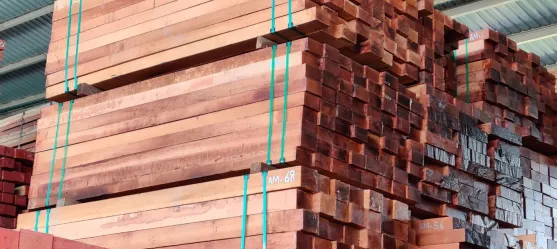
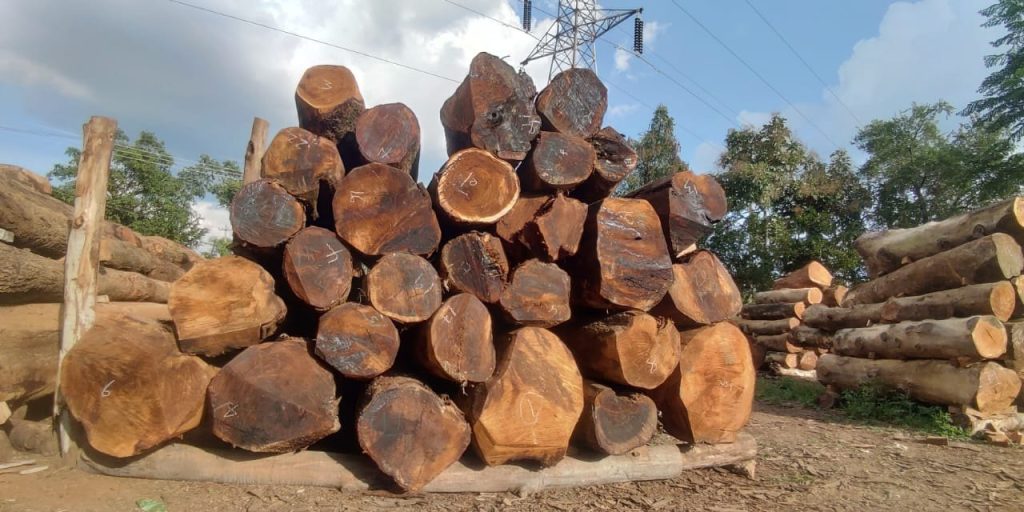
Honne wood is a premium hardwood known in Southern India as the Indian Kino Tree (Pterocarpus marsupium) or sometimes as an imported variety from Australia. It is highly valued as a strong and durable alternative to teak wood for furniture, doors, and windows.
Appearance & Texture
- Color: The wood features a rich, uniformreddish-brown hue that resembles high-end hardwoods like rosewood or teak.
- Grain: It generally has a straight to slightly interlocked grain with a fine, smooth texture.
- Unique Feature: When the wood comes into contact with water, it may release its inherent natural color (a reddish tint) for some time. This trait can be used as a reliable marker for identification.
- “Kino” Sap: The tree’s heartwood is known for exuding a blood-red gum or resin called “kino,” which has medicinal values.
Strength & Durability
- Hardness & Density: Honne is a strong, moderately heavy, and dense wood. It is often considered denser and heavier than teak wood, providing excellent strength and robust mechanical properties.
- Durability: It is naturally resistant to termites and fungal attacks, making it highly durable. The wood has the capacity to withstand various climatic conditions.
- Stability: When seasoned properly, the wood shows minimal warping, cracking, or shrinkage, offering good stability for construction purposes.
- Workability: Honne takes well to paint, stain, and polish, although a good sealant is recommended to manage the natural oils and prevent potential gum bleed-through.
Common Uses
- Furniture: Widely used for making durable tables, chairs, cabinets, and premium wooden decor.
- Doors and Windows: A preferred wood for residential doors, windows, and frames, especially when cost is a consideration.
- Construction & Flooring: Used in general construction, architectural millwork, flooring, and historically, for engineering applications like bridge building and posts.
- Medicinal Uses: The tree’s “kino” resin has traditional value in Ayurvedic medicine.
In summary: Honne wood is a durable, strong, and aesthetically pleasing option, particularly popular in Southern India as a high-quality alternative to more expensive hardwoods like teak.