
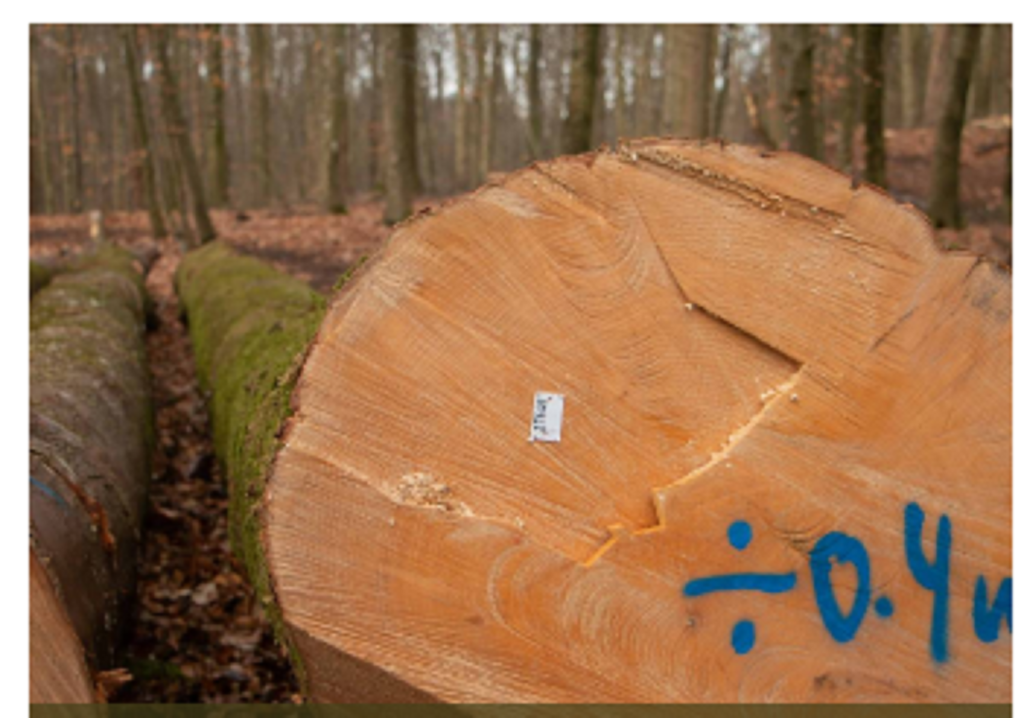
The common name “Sycamore” can refer to two very different trees. When the term is used in conjunction with “Maple,” it almost always refers to the European Sycamore Maple (Acer pseudoplatanus), a true maple species with high-quality timber.
Appearance & Texture
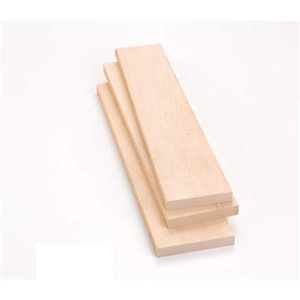
- Color: The sapwood is the most commonly used part, ranging from nearly white to a light golden or reddish-brown. The heartwood is a darker reddish-brown. The wood tends to yellow slightly with age and exposure to air.
- Grain: It typically has a straight, fine, and even texture. Occasionally, trees produce highly valued “figured” grain patterns, such as curly, wavy, or quilted maple, which dramatically increases the wood’s value for decorative purposes.
- Appearance: It is a non-staining wood and has no characteristic odor, which makes it ideal for use with food.
Strength & Durability
- Hardness: It is a medium-density hardwood, with a Janka hardness rating of around 1,050 lbf (4,680 N). This makes it durable but also easy to work.
- Stability: It is known for good dimensional stability, resisting excessive expansion or contraction when properly seasoned.
- Durability: In terms of rot resistance, it is rated as non-durable to perishable for exterior use unless properly treated.
Common Uses
- The clean, light color, fine grain, and ease of workability make Sycamore Maple highly sought after for specialized applications:
Musical Instruments: It is a traditional wood for making the backs, necks, and scrolls of violins and other stringed instruments.
- Fine Furniture & Veneer: Used in high-end cabinetry, joinery, and decorative veneers, especially the figured grain varieties.
- Kitchen Utensils: Because the wood is non-staining and doesn’t impart a taste or smell to food, it’s widely used for cutting boards, wooden spoons, and bowls.
- Flooring: A practical choice for wood flooring and parquetry due to its wear resistance.