
Common Names
American Ash, Northern Ash, Southern Ash, White Ash, Brown Ash, American White Ash
Botanical Name
Fraxinus spp. (Multiple subspecies)
Species Type
Hardwood
Color & Appearance
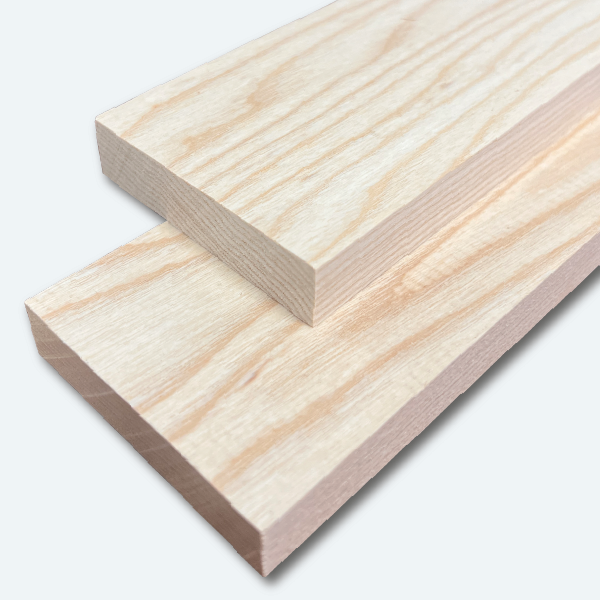
American Ash is known for its attractive light-colored appearance. The sapwood is very pale to almost white, while the heartwood ranges from light brown, greyish brown, to pale yellow with brown streaks.
Depending on color selection:
White Ash → Mostly sapwood (very light and clean)
Brown Ash → Mostly heartwood (warmer natural tones)
The wood often contains small mineral streaks and light brown flecks, which are natural characteristics and not considered defects.
Grain & Texture
American Ash generally features a straight grain with a coarse but even texture.
Its structure gives the wood:
A clean and uniform appearance
Excellent machining properties
Strong visual appeal for interior applications
Durability & Rot Resistance
Heartwood → Not naturally resistant to decay
Sapwood → Highly permeable and can absorb preservatives easily
Because of this, American Ash is best suited for interior applications where moisture exposure is minimal.
Workability
American Ash is widely known for being easy and enjoyable to work with.
It:
Machines smoothly
Nails, screws, and glues extremely well
Carves and turns beautifully
Steam bends effectively
Accepts stains, oils, and polishes to a high-quality finish
Health Considerations
Ash is generally safe to work with, but some individuals may experience:
Mild skin or respiratory irritation from dust
Slight eye irritation in sensitive cases
Pricing & Availability
American Ash is readily available throughout the eastern regions of the United States.
Outside the USA, it is available through specialized timber importers.
Its price falls in the moderate range, offering a premium look without the cost of exotic hardwoods.
Sustainability Status
American Ash is not currently listed as an endangered species. Availability is stable, but regional supply can vary depending on forestry management and environmental conditions.