
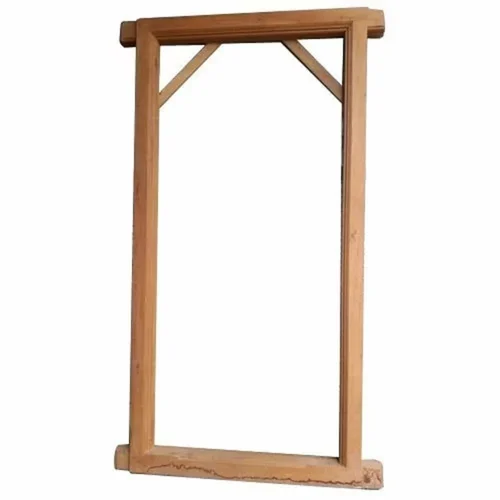
A “vascal” (also spelled vaskal or vasakal) is a regional term, primarily used in India (including Tamil Nadu), for a door or window frame. The term often appears in the context of construction and carpentry when referring to the structural components that surround the opening for a door.
Key
- Function: The primary purpose of a vascal frame is structural—to provide support for the door (or window), facilitate hanging the door shutter with hinges, and seal the opening in a wall.
- Materials: While the term is often associated with traditional wooden frames, modern vascal frames are also made from other materials like WPC (Wood Plastic Composite), which is popular for bathroom applications due to its water and termite resistance.
- Wood Types: Various types of wood are used for making vascal frames, depending on the desired durability and budget. Common examples in the region include:
- Teakwood
- African Teak
- Honne Wood (Indian Kino Tree)
- Salwood
- Mahogany
- Design: Vascal frames come in standard rectangular shapes but can also be customized with intricate carvings for main doors or pooja rooms (prayer rooms).
- Dimensions: They are commonly available in standard heights such as 7 feet or 8 feet, with varying cross-sectional sizes (e.g., 5×3 inches, 4×2.5 inches) to suit different wall thicknesses and door types.